

New Research Fuels Cold Plunge Confusion: Carbon Performance Explains Why Advice Conflicts and Offers Clarity
News originally published by
EIN Presswire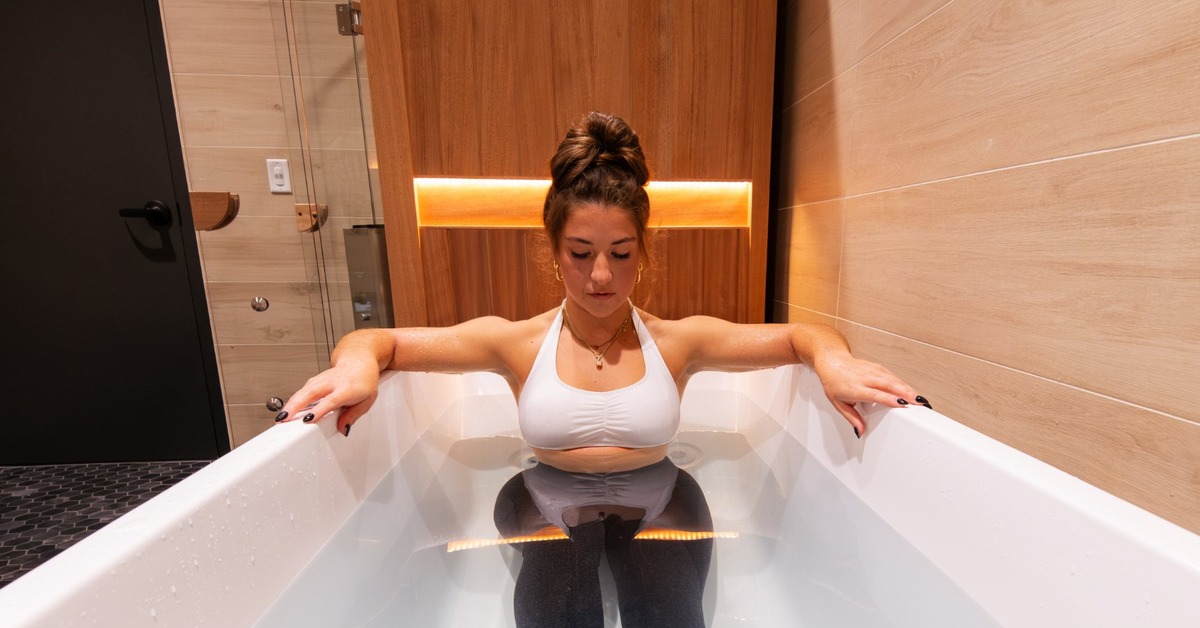
Cold plunge at Carbon Performance
Experts say missing context is needed to determine when a cold plunge may help recovery or hinder training goals and offer advice for strategic use.
People need to understand what the research actually measured before deciding whether cold plunging is beneficial, counterproductive, or worth adding to their recovery routine”
NASHVILLE, TN, UNITED STATES, November 5, 2026 /EINPresswire.com/ -- As cold-water immersion continues to gain popularity, so has discussion about its potential benefits, possible drawbacks, and the best ways to use it, leading to an overwhelming amount of conflicting advice.— Brent Laffey, co-founder and owner of Carbon Performance
The role of cold-water immersion after exercise has been debated for years, but two 2026 reviews may help explain the recent surge in cold plunge confusion, especially around timing. While neither established a universal rule for the best time to cold plunge, their interpretations led to polar-opposite advice.
The first systematic review and meta-analysis prompted opinions that cold-water immersion too soon after exercise could work against certain performance goals. A few months later, findings from the second review fueled suggestions that the first 24 hours after exercise may be the “sweet spot” for cold plunge.
Carbon Performance, a multi-location fitness and wellness center that offers cold plunge as part of its advanced recovery amenities, says the problem isn’t that one statement is wrong and the other right. Confusion comes when the findings are stripped of context and turned into broad advice.
“People need to understand what the research actually measured before deciding whether cold plunging is beneficial, counterproductive, or worth adding to their recovery routine,” says Brent Laffey, co-founder and owner of Carbon Performance. “To help clear up confusion, we feel like health and wellness experts have a responsibility to look at the full body of evidence and explain what it really says so people can make informed decisions that fit their training and recovery goals.”
WHAT COLD IMMERSION RESEARCH ACTUALLY SAYS
Cold-water immersion has been studied for years, examining its effects on short-term recovery, performance, strength development, muscle growth, and general well-being. Carbon Performance says understanding what each study measured and considering its findings in full context is essential before deciding if a cold plunge is right for you.
Some of the current research informing discussion about the benefits and drawbacks of cold-water immersion includes:
* Post-Exercise Muscle Damage Recovery: A February 2026 systematic review and meta-analysis of 30 randomized controlled trials found that cold-water immersion reduced soreness and creatine kinase, a commonly measured marker of exercise-induced muscle damage. It did not significantly improve maximal isometric strength or overall countermovement-jump recovery. Partial immersion also temporarily reduced explosive power immediately after exercise. Many of the soreness and biochemical recovery benefits were strongest around 24 hours.
* Acute and Delayed Post-Exercise Recovery: A May 2026 systematic review and network meta-analysis compared cold-water immersion, massage, and active recovery after strenuous exercise. The clearest benefits appeared within the first 24 hours. Cold-water immersion stood out for reliably reducing soreness and creatine kinase. Researchers emphasized that the best recovery strategy depends on the specific outcome someone is trying to improve.
* Cold-Water Immersion Across Different Types of Exercise: A March 2026 network meta-analysis examining cold-water immersion across resistance training, endurance exercise, and team sports found that its effects varied by exercise type and protocol. Cold-water immersion did not outperform passive recovery for strength after resistance training, while some cold-water protocols performed better for other recovery or performance outcomes.
* Immediate Cooling and Muscle Rebuilding: A 2025 controlled study examined what happened when exercised muscle was cooled immediately after resistance exercise. Cooling reduced blood flow to the muscle and lowered how much dietary amino acid was incorporated into muscle protein during recovery. The study did not measure long-term muscle growth, but it offers a possible explanation for why repeatedly cooling exercised muscle immediately after lifting could interfere with the rebuilding process.
* Immediate Cold Exposure and Muscle Growth: A 2024 systematic review and meta-analysis found that people who regularly used cold-water immersion after resistance training still gained muscle, but muscle growth was modestly greater without immediate post-workout cold immersion. The analysis focused on immersion used within about 15 minutes of lifting, and researchers noted that it remains unknown whether waiting several hours or using cold less frequently has the same effect.
* Longer-Term Strength Research: Meta-analyses published in 2021 and 2023 found that regular cold-water immersion around resistance training may reduce some strength adaptations. The effect has not been consistent across all exercise types, reinforcing why training goals and protocols matter.
Another area creating confusion and potentially overgeneralized safety concerns is how cold plunging affects women, particularly during perimenopause or menopause. Most warnings that women shouldn't cold plunge focus on possible effects on cortisol, stress response, and hormonal health. But the evidence behind those claims is limited, often based on small samples, and even thinner across different female life stages, making broad recommendations against cold plunging difficult to justify. Women who are concerned about how cold plunging may affect their health should pay attention to their individual response and talk with a qualified healthcare professional before treating it as either a solution or something to avoid.
TIPS FOR USING A COLD PLUNGE STRATEGICALLY
With research supporting cold-water immersion benefits for soreness and short-term recovery but also raising questions about muscle growth, strength, and how the evidence applies to women, Carbon Performance says the best approach is to cold plunge strategically rather than follow one rule for every workout and recommends the following:
Match Cold Plunge Timing and Frequency to Your Training Goal
If maximizing muscle growth is the priority, a cautious approach is to avoid making cold plunge an automatic part of every post-lifting routine. Use it less frequently around resistance training, allow more time between lifting and cold exposure, or save it for rest days to reduce potential conflict. When short-term recovery is the greater priority, using cold sooner may make more sense. This could include periods of closely spaced training, multi-day events, or an athlete preparing for another practice, game, or competition. Since research hasn't established one timing or frequency rule that applies to every goal, base both on your priorities.
Start Conservatively and Don’t Assume More Is Better
If you are new to cold plunging, ease into colder temperatures and longer sessions instead of starting with extreme exposure. Sudden cold can trigger a strong physiological stress response. Starting conservatively lets you see how your body tolerates it. Even after cold plunging is part of your routine, don't assume colder water or longer sessions are more effective. Research commonly uses immersion periods of about 10 to 15 minutes, and the best temperature varies depending on the outcome being measured. The protocol should match your goal.
Focus on Recovery Basics First
If you have access to a cold plunge, use it strategically, but remember it is only one part of recovery. Advanced modalities like cold plunge, infrared sauna, compression therapy, and massage can support recovery, but they shouldn't replace the foundational basics that have a greater influence on recovery and progress. Getting enough quality sleep, eating sufficient calories and protein, staying properly hydrated, taking adequate rest days, managing stress, and keeping total training load appropriate should be the priority of any recovery plan.
Be Cautious With Cold Plunge Advice
The answers you see online for common cold plunge questions like “Do cold plunges kill muscle gains?”, “Can cold plunges help with muscle recovery after workouts?”, and “What are the best practices for women doing cold plunges?”, are often opinion-based, anecdotal, or presented with little context about the research behind them. Carbon Performance says a social media post or headline that cites a study shouldn't automatically be treated as fact without considering the quality, size, and scope of the research behind it. If you are unsure how cold plunge fits into your routine, speak with a qualified fitness or recovery professional who can help you consider your training goals, schedule, and recovery needs, and always consult with a healthcare professional before using cold exposure if you have a medical condition, are pregnant, take medications that may affect circulation or blood pressure, or have concerns about how your body may respond.
ABOUT CARBON PERFORMANCE
Carbon Performance delivers a performance-driven, science-informed, holistic approach to fitness, strength training, recovery, and nutrition. The brand integrates elite equipment, structured coaching, advanced recovery infrastructure, and community inside environments built for measurable, long-term results. If you are looking for a premium gym with cold plunge and sauna facilities, Carbon Performance has locations in Tennessee, Georgia, and North Carolina, with a location coming soon in Utah.
To learn more about Carbon Performance, visit: www.carbonperformance.com
###
** Disclaimer: This release is intended for informational and educational purposes only and does not constitute medical advice. Consult a healthcare professional before using cold-water immersion, especially if you have a medical condition or are pregnant.
Research Referenced
- Zhu Y, Yang L, Liu T, et al. (2026). Effects of cold-water immersion at different body regions on post-exercise muscle damage recovery: a systematic review and meta-analysis. https://doi.org/10.3389/fspor.2026.1738075
- Hou C, Yin W, Qiao F. (2026). Acute and Delayed Effects of Post-Exercise Recovery Strategies on Explosive Performance and Markers of Muscle Damage: A Systematic Review and Network Meta-Analysis. https://doi.org/10.3390/healthcare14101321
- Yu T, Liu Y, Ding C, et al. (2026). Cold water immersion protocol optimization across exercise modalities: a systematic review and network meta-analysis of resistance training, endurance exercise, and team sport applications. https://doi.org/10.1186/s13102-026-01653-5
- Betz MW, Fuchs CJ, Chedd F, et al. (2025). Postexercise Cooling Lowers Skeletal Muscle Microvascular Perfusion and Blunts Amino Acid Incorporation into Muscle Tissue in Active Young Adults. https://doi.org/10.1249/MSS.0000000000003723
- Piñero A, et al. (2024). Throwing cold water on muscle growth: A systematic review with meta-analysis of the effects of postexercise cold water immersion on resistance training-induced hypertrophy. https://doi.org/10.1002/ejsc.12074
- Grgic J. (2023). Effects of post-exercise cold-water immersion on resistance training-induced gains in muscular strength: a meta-analysis. https://doi.org/10.1080/17461391.2022.2033851
- Malta ES, Dutra YM, Broatch JR, Bishop DJ, Zagatto AM. (2021). The Effects of Regular Cold-Water Immersion Use on Training-Induced Changes in Strength and Endurance Performance: A Systematic Review with Meta-Analysis. https://doi.org/10.1007/s40279-020-01362-0
- Pound M, Massey H, Roseneil S, et al. (2024). How do women feel cold water swimming affects their menstrual and perimenopausal symptoms?
https://doi.org/10.1177/20533691241227100
- Machado AF, et al. (2016). Can Water Temperature and Immersion Time Influence the Effect of Cold Water Immersion on Muscle Soreness? A Systematic Review and Meta-Analysis. https://pmc.ncbi.nlm.nih.gov/articles/PMC4802003/
- Wang H, Wang L, Pan Y. (2025). Impact of different doses of cold water immersion (duration and temperature variations) on recovery from acute exercise-induced muscle damage: a network meta-analysis. https://pmc.ncbi.nlm.nih.gov/articles/PMC11897523/
- Cain T, Brinsley J, Bennett H, et al. (2025). Effects of cold-water immersion on health and wellbeing: A systematic review and meta-analysis.
https://doi.org/10.1371/journal.pone.0317615
Stacy McCloud
Aroluxe
stacy@aroluxe.com
Visit us on social media:
Instagram
Facebook
Legal Disclaimer:
EIN Presswire provides this news content "as is" without warranty of any kind. We do not accept any responsibility or liability for the accuracy, content, images, videos, licenses, completeness, legality, or reliability of the information contained in this article. If you have any complaints or copyright issues related to this article, kindly contact the author above.
